

Key Factors to Consider When Choosing a Live-In Care Agency in Dartford

Ola Prestige Care Services - Dartford Home Care provider-Live-In Care Agency in Dartford

Maybe your mum has had another fall. Perhaps your dad is forgetting medication, struggling with meals, or becoming increasingly isolated. You’re trying to help, but you’re beginning to wonder whether short visits are enough. This is often the point where families start exploring live-in care. Choosing the right live-in care agency in Dartford is one of the most important decisions a family can make when supporting an elderly parent or an elderly person. The right choice can significantly improve safety, comfort, and overall quality of life for seniors, while the wrong one can lead to stress, uncertainty, and inconsistent care. For families in Dartford and Kent, here are the key factors that truly matter: 1. Reputation and Track Record The first step is always trust. Look for agencies with: Checking accreditation and certifications also helps confirm that the agency follows recognised UK care standards and best practices. 2. Caregiver Training and Qualifications The quality of care your elderly parent receives depends directly on the caregiver’s skills and training. A reliable agency should ensure caregivers are able to support conditions such as: It’s also important to ask about: At Ola Prestige Care Services (OPCS), caregiver development is a core standard with weekly reviews, bi-weekly training, and monthly performance checks to ensure consistent, high-quality support for every elderly person in our care. We are also registered with the Care Quality Commission (CQC) and the Information Commissioner’s Office (ICO), reinforcing our commitment to safe, regulated care. 3. Communication and Family Involvement Clear communication is essential when caring for elderly parents. A strong live-in care agency should provide: Not all care is the same. Ensure to ask: This ensures families are never left guessing and always feel connected to their elderly person’s care journey. Why Families Choose Live-In Care For many families, the decision to consider live-in care is not about finding more care, it’s about finding the right care. When an elderly parent begins to need more support, families are often faced with a difficult choice. They want their loved one to remain safe, but they also want them to maintain their independence, routines, and quality of life. This is why many families in Dartford and Kent choose live-in care. 1. Staying at Home Home is more than a place. It is where memories, routines, and a sense of familiarity exist. For many elderly parents, remaining at home can help preserve confidence, independence, and emotional wellbeing. Live-in care allows seniors to continue living in familiar surroundings while receiving the support they need. 2. Consistency of Care One of the biggest benefits of live-in care is continuity. Rather than seeing multiple caregivers throughout the week, the elderly person receives support from someone who understands their routines, preferences, and individual needs. This consistency helps build trust and provides reassurance for both the individual and their family. 3. Companionship and Emotional Support Loneliness can have a significant impact on the wellbeing of seniors. A live-in caregiver provides more than practical assistance. They offer companionship, conversation, and meaningful social interaction throughout the day. Having a familiar and trusted person nearby can make a positive difference to an elderly person’s confidence, emotional wellbeing, and overall quality of life. 4. Avoiding Residential Care Many families explore live-in care because they want to avoid moving their loved one into a residential care setting. Live-in care offers a personalised alternative, allowing elderly parents to remain in the comfort of their own home while receiving one-to-one support tailored to their needs. For many families, this provides the reassurance that their loved one is safe and supported without the disruption of leaving the place they know and love. At OPCS, we understand that every family situation is different. Our nurse-led team works closely with families to create personalised live-in care plans that promote safety, dignity, independence, and peace of mind. The Role of Family in the Live-In Care Process This is the most important section of this guide. Family involvement is a critical component of successful live-in care. While the caregiver provides the day-to-day support, family members play a vital role in overseeing and coordinating the care. Regular communication with the caregiver and the agency is essential to ensure that the care plan is being followed and to make any necessary adjustments based on the elderly person’s changing needs. Families can also provide valuable emotional support to their elderly loved ones. Regular visits and phone calls can help maintain a sense of normalcy and connection, which is crucial for the senior’s emotional well-being. Encouraging the elderly person to participate in family activities, even if just virtually, can also help them feel included and valued. It’s also important for families to offer support to the caregiver. Providing them with the necessary resources and understanding their needs can help prevent caregiver burnout, ensuring that they can continue to provide high-quality care. Open and honest communication between the family and the caregiver can create a collaborative and supportive environment that benefits everyone involved. How to Evaluate the Quality of Care Beyond choosing an agency, families should also assess the quality of care being delivered, not just what is promised. 1. Accreditation and Regulation Always check if the agency is regulated by recognised bodies such as the Care Quality Commission (CQC). This confirms that the agency meets national standards for safety, dignity, and quality of care for senio 2. Caregiver Recruitment and Ongoing Training Understanding how caregivers are selected is critical. Ask: High-quality agencies invest continuously in their staff to ensure consistent care for every elderly parent. At OPCS, our structured training system ensures caregivers are continuously improving, not just placed and forgotten. 3. Client Feedback and Real Experiences One of the strongest indicators of quality care is real feedback from families. Look for: Don’t hesitate to ask for references or speak to families who have used the service before. Their experiences often reflect the true standard of care your elderly person will receive. By carefully considering these factors, families in Dartford and Kent can make

Mental Health and Hospital Reablement – An Extract from CQC 2024/25 State of Health Care and Adult Social Care in England

Ola Prestige Care Services Dartford Kent-Home Care Services-Hospital Reablement-Mental Health and Hospital Reablement

How CQC’s findings shape the future of home care and where Ola Prestige Care Services fits in Introduction The Care Quality Commission’s State of Health Care and Adult Social Care in England 2024/25 reveals growing pressures across services. People face long waits for care, and outcomes vary widely by region. For home care providers, the report highlights how limited community support and staffing shortages affect Mental Health and Hospital Reablement, increasing risks after discharge and prolonging recovery for those returning home. Two themes stand out for providers like Ola Prestige Care Services: mental health and community mental health waiting times, and hospital reablement/post-discharge support (the bridge between hospital care and safe independent living at home). Both areas are central to excellent domiciliary care, and both are under pressure nationally. This article is a detailed, practical analysis of the CQC findings, what they mean for home care in Dartford and Kent, and how a nurse-led, CQC-regulated provider can respond with better outcomes for clients and families. What the CQC found: headline issues that matter to home care 1. Access to services and long waits for community mental health support The easy-read CQC summary flags that many people wait months for community mental health services; the report notes that significant proportions of people reported waiting three months or more for community mental health care. Long waits push need into crisis, increase carer strain, and put pressure on emergency services and hospitals. Why this matters for home care 2. Discharge processes and post-hospital support are inconsistent The CQC emphasises that hospitals and community services do not always work together effectively. While some areas manage safe discharge and subsequent support well, many do not; staffing gaps and capacity constraints in home care and community nursing limit the ability to provide timely, personalised reablement after hospital discharge.  Consequences: poorly coordinated discharges can lead to: 3. Workforce pressures and skills gaps across health and social care CQC highlights staffing problems: there are many vacancies in adult social care, fewer district nurses per older person than in past years, and shortages of staff with the right clinical skills in hospitals and community teams. These shortages directly impact both mental health community provision and the ability to deliver timely reablement at home.  4. Unequal experiences for certain groups The report points out that older people and people in deprived areas are more likely to be readmitted within 30 days of discharge, while people with dementia, autistic people, and those with learning disabilities often face additional barriers to accessing services or leaving hospital with a robust plan. These uneven experiences highlight where targeted, specialist home care can make a difference. 5. Areas of improvement and innovation Even within the pressures, CQC records positive steps: local integration pilots, better use of technology and AI in some services, and examples where joined-up approaches have shortened waits or improved discharge planning. These examples provide models for scaling good practice.  Mental health: the community gap, risks, and the role of domiciliary care The scale and shape of the problem CQC’s State of Health Care and Adult Social Care in England 2024/25 reveals growing pressures across health and social care. Many people face long waits, and outcomes vary by region. For home care providers, the report highlights how limited community support, workforce shortages, and fragmented discharge processes impact Mental Health and Hospital Reablement, increasing risks after discharge and slowing recovery. CQC’s easy-read also notes that a significant number of people are waiting long periods — often over three months — for community mental health support. Such delays erode wellbeing, heighten crisis risk, and underline the urgent need for timely, person-centred, and integrated home care solutions. Long waiting times for mental health support amplify demand for practical, supportive home-based care in several ways: families need help maintaining routines, managing medication, supporting social engagement, and responding to mental health crises. When community mental health teams cannot meet demand promptly, domiciliary carers frequently become first-line support, but they may lack specialist training, supervision, or clinical backup. Key risks when mental health services are delayed What good community-aligned home care must do (practical checklist) To mitigate risk and fill gaps responsibly, home care should offer more than tasks, it must be clinically aware, trauma-informed, and integrated with mental health services: A nurse-led provider is well placed to deliver these components because clinical leadership ensures that non-clinical carers do not work in isolation and that escalation and clinical governance are embedded. Evidence-led rationale CQC’s findings make it clear that mental health community services and social care must be aligned to prevent avoidable deterioration and crisis admissions. Where integration exists, outcomes improve; where it doesn’t, waiting lists lengthen and pressure shifts to emergency care. For domiciliary providers, this underscores why investment in training and clinical governance is not optional, it is integral to safe, effective community mental health support. Hospital reablement and post-discharge care: the critical bridge Why reablement matters now The period immediately after hospital discharge is high-risk. CQC notes that some older people are more likely to be readmitted within 30 days and that many people feel unready to leave hospital or that their post-discharge care does not meet their needs. These are precisely the vulnerabilities our reablement services aim to address.  Age UK’s work also highlights the prevalence of readmission among older people and the systemic pressures that contribute to it: where community and reablement supports are limited, readmissions rise and people’s recoveries are jeopardised. Core elements of successful reablement (what CQC and evidence recommend) Reablement is short-term, goal-oriented support that focuses on restoring independence rather than doing tasks for someone. Key features include: CQC stresses the importance of safe, joined-up discharge and local examples show that when health and social care coordinate, readmission risks fall and recovery is quicker. Practical shortfalls that produce readmission risk From the CQC findings, common failure points are: What reablement looks like when done well (a short pathway) What the CQC findings mean locally (Dartford & Kent) and practical implications

Care After Illness: How Reablement Support Helps You Recover Faster

Ola Prestige Care Services Dartford - Kent - United kingdom - Home Services - Hospital Reablement - Care After Illness How Reablement Support Helps You Recover Faster

Care After Illness: Why the Right Support at Home Changes Everything I have spent most of my career observing what happens after someone leaves the hospital. The anxiety, the exhaustion, and often the quiet fear of coping alone. Discharge is not just a date on a chart; it is a turning point that can shape recovery for months to come. This is why Care After Illness is one of the most important and most misunderstood stages of the healthcare journey. At Ola Prestige Care Services, we believe recovery does not end at the hospital door. With the right support at home, people not only recover but also regain confidence, independence, and a sense of normalcy. That belief is what led us to build a nurse-led reablement service that delivers Care After Illness the right way: clinically informed, emotionally supportive, and fully centred on the individual. Because when care is done properly after illness, people do not just survive, they thrive. What Does Care After Illness Really Mean? Care After Illness refers to short-term, focused home support designed to help someone recover following: This type of care is often referred to as reablement. It typically lasts up to six weeks and focuses on helping people do things for themselves again, safely and confidently. It is not about taking over. It is about rebuilding ability. At Ola Prestige Care Services, Care After Illness may include: We work with people in their own homes — listening, encouraging, and simplifying care so recovery feels manageable, not overwhelming. Why Care After Illness Matters So Much When people leave hospital without enough follow-up support, problems can appear quickly: These setbacks are often preventable, yet they are one of the biggest causes of hospital readmission. Effective Care After Illness breaks that cycle. It provides the bridge between hospital treatment and independent living, helping people rebuild strength while maintaining medical, emotional, and environmental safety. Done well, it reduces pressure on the NHS. Done properly, it spares families the stress of another crisis. I have seen firsthand how a few weeks of focused, compassionate support can transform recovery. The moment someone realises, “I can do this again,” everything changes. Our Nurse-Led Approach to Care After Illness At Ola Prestige Care Services, our Care After Illness is delivered through a nurse-led, CQC-registered service, giving families and professionals confidence that care meets the highest regulatory standards. We bring hospital-level awareness into the comfort of home, ensuring recovery is monitored safely, professionally, and with compassion. Every Care After Illness plan begins with clinical thinking: This is what makes our approach different. We do not just provide support — we deliver outcomes. And while our standards are clinical, our care never feels clinical. Support in your home should be explained simply and delivered with warmth and respect. The Emotional Side of Recovery at Home Hospitals treat the body. Home heals the person. Yet the transition home after illness can be emotionally draining. Many people worry about: This is where reablement support goes beyond physical support. Our calm, consistent presence helps rebuild confidence step by step — physically, emotionally, and socially. Sometimes recovery begins not with movement, but with reassurance, conversation, and knowing someone is there. That might mean a gentle check-in over tea, encouragement to try again tomorrow, or simply listening. Measuring What Truly Matters Success in Care After Illness is measured by what people regain, not what is done for them: These milestones may sound small, but to someone recovering, they represent freedom and dignity. We review progress weekly and adapt care plans as needed, because recovery is never linear. When hospital teams know their patients are coming home to structured Care After Illness support, they can discharge with confidence. When families know a professional is monitoring recovery closely, they can rest easier. Why Local Reablement Care Makes a Difference As a Dartford-based provider, we understand local healthcare systems and community needs. We work closely with: Being local means acting quickly, communicating clearly, and responding when it matters most. We are not distant or bound by corporate layers; we are part of the community we serve. When the phone rings, we answer. When someone needs Care After an Illness urgently, we find a way. Recovery at Your Pace Care After Illness is not about rushing recovery; it is about guiding people back to confidence at their own pace. At Ola Prestige Care Services, we combine professional oversight with genuine kindness. We keep care calm, structured, and empowering, so people feel human again not like a patient. Because Care After Illness is not just about getting better. It is about the moment someone says: “I feel like myself again.” That is what we work for. Ready to take the next step in Care After Illness?Discover how our nurse-led reablement service supports recovery, rebuilds confidence, and helps people regain independence at home. Check out our Reablement Services here.

Top Live In Care Agencies For An Elderly Parent: A Complete Guide to Quality Support

Urgent care-Live In Care Agencies-Dartford-Home Care-Ola Prestige Care Services-Dartford-Kent-Top Home Care Provider in Dartford

Live In Care Agencies in Dartford: What It Is and How It Works Maybe your mum is no longer safe being alone overnight… Maybe your dad is forgetting medication, struggling with mobility, or calling you multiple times a day because something feels “off.” You’re trying to manage it all — work, family, and their care, but deep down, you know a few visits a day may no longer be enough. And that’s where many families in Dartford and Kent start looking into live-in care — especially when supporting an elderly parent begins to feel overwhelming. Live-in care is a comprehensive service where a professional caregiver lives in the home of an elderly person, providing continuous, round-the-clock support. Unlike standard in-home care, which may only involve short daily visits, live-in care ensures that someone is always present — ready to respond at any time, day or night. This level of support becomes essential for seniors or elderly parents who require constant supervision, are becoming increasingly frail, or are living with complex medical needs. At Ola Prestige Care Services (OPCS), live-in care is one of our core services, because we’ve seen how transformative it can be for both the elderly person and their family. A live-in caregiver supports with: But beyond the practical support, what truly makes a difference is companionship. For many elderly parents, loneliness can quietly impact their health and well-being. Having a consistent caregiver in the home builds trust, familiarity, and emotional security. Something that short visits simply cannot provide. Because the caregiver lives in the home, they develop a deeper understanding of the elderly person’s routines, preferences, and behaviours, allowing for more personalised and responsive care. Live-in care is also highly flexible and can be tailored to suit the exact needs of your elderly parent. Whether it’s: Our caregivers are trained to adapt as needs change. This makes live-in care one of the most effective solutions for families who want to ensure their elderly parents receive consistent, one-to-one support, without leaving the comfort of their own home. Benefits of Choosing Live-In Care for Your Elderly Parent One of the most significant benefits of live-in care is the peace of mind it offers families, knowing that their loved one is receiving consistent, high-quality care in the comfort of their own home. Unlike nursing homes or assisted living facilities, live-in care allows seniors to remain in a familiar environment, which can be incredibly comforting and beneficial for their mental health. This familiarity can help reduce anxiety and confusion, especially for those with cognitive impairments. Live-in care also provides unparalleled continuity of care. With a dedicated caregiver, there is no need to constantly explain routines or preferences, as the caregiver becomes intimately familiar with the elderly person’s habits and needs. This continuity not only improves the quality of care but also fosters a deeper bond between the caregiver and the senior, enhancing their overall quality of life. The consistent presence of a caregiver can also help detect any health issues early, allowing for timely medical intervention. Another key advantage is the personalised attention that live-in care offers. Unlike in institutional settings, where caregivers may have to divide their time among many residents, a live-in caregiver focuses solely on one individual. This one-on-one attention ensures that the elderly person’s needs are met promptly and effectively. Additionally, the flexibility of live-in care means that the support can be tailored to fit the unique schedule and preferences of the elderly person, providing a level of customisation that is hard to achieve in a more structured care setting. Why This Matters Now When care needs increase, delays can lead to: What starts as “they’re managing” can quickly become a crisis situation. Live-in care is often considered at the point where safety, consistency, and reassurance can’t be guaranteed anymore. Costs Associated with Live-In Care: What to Expect When families start exploring support for an elderly parent or an elderly person, one of the first questions is usually about cost, and understandably so. For many seniors, live-in care feels like a big step, so it’s important to understand what you are actually paying for and what influences the price. The cost of live-in care in Dartford and Kent can vary depending on several key factors: In most cases, live-in care is priced as a daily or weekly rate, rather than hourly care. This is because the caregiver is living in the home and providing continuous support throughout the day and night. What is Typically Included in the Cost For an elderly parent, live-in care usually covers: Understanding exactly what is included is important, as some agencies may charge extra for specialist care or additional support needs. Financial Support and Funding Options Families often don’t realise that there may be financial support available to help with live-in care costs for an elderly person. This can include: Exploring these options early can make a significant difference in affordability and long-term planning for elderly parents. We believe families should never feel confused or uncertain about care costs. That’s why we provide: We also support families in understanding the best way to fund care for their elderly parent, ensuring decisions are realistic, informed, and sustainable. While cost is important, families should also consider: The right live-in care is not just about affordability, it’s about ensuring your elderly person is safe, supported, and treated with dignity every day. Questions to Ask Potential Live-In Care Agencies In our experience as a home care agency in Dartford, supporting many families with an elderly parent or an elderly person, we always advise families to slow down and ask the right questions before making a decision. The quality of care for seniors often depends not just on the service offered, but on how well the agency is structured, trained, and managed. 1. Experience and Expertise Start with the basics, but don’t overlook their importance. Ask: This helps you understand whether the agency is truly equipped to handle your loved one’s needs or if they are

Signs Your Elderly Parent Needs Help: Home Care Tips for Dartford Families

Elderly Parent Needs Help- Dartford Home Care provider-Live-In

Is your elderly parent starting to struggle with daily life? Perhaps your mum is eating less, your dad has suddenly become confused, or you have a growing feeling that something is not quite right. For many families across the UK, including in Dartford and Kent, these subtle changes are often the first signs your elderly parent needs help at home. Recognising these warning signs early can prevent serious health risks and allow families to arrange the right support before a crisis occurs. In this guide, we explain the most common signs your elderly parent needs help, what those signs may indicate, and what practical steps you can take, including when it may be time to consider professional support and how to get carers for the elderly. Why Recognising the Signs Your Elderly Parent Needs Help Matters Elderly care is not only about medical support; it is also about ensuring safety, dignity, and independence as your parent ages. Many families assume they will “cope for now,” but changes often happen gradually. A parent who once managed independently may slowly begin to struggle with cooking, hygiene, memory, or mobility. In many cases, families only realise the seriousness when they start urgently searching for how to get carers for the elderly, especially after a fall, confusion episode, or missed medication. The truth is simple: when an elderly parent needs help, early action prevents long-term decline and emergency situations. It’s common to think: “Let’s just monitor it for now.” But here’s what often happens instead: By the time families start urgently searching for support, they’re already in crisis mode. Recognising the signs your elderly parent needs help at home early allows you to step in before things escalate. Common Signs Your Elderly Parent Needs Help at Home There are often early warning signs before families accept that an elderly parent needs help at home. These include: These patterns form part of the signs your elderly parent needs help, and they usually become more frequent over time. When these signs appear together, it is no longer “just ageing” — it is a signal that support is needed. Physical Changes That May Indicate Your Parent Needs Support Physical decline is often the clearest indicator that an elderly parent needs help at home. Watch for: Reduced appetite is especially concerning because it can quickly lead to weakness, dehydration, and hospitalisation. At this stage, families often begin exploring care support options or learning how to get carers for the elderly to assist with daily routines safely. Cognitive Changes: When a Parent Becomes Confused One of the most worrying signs is when dad has suddenly become confused, or his memory starts to noticeably decline. Key indicators include: These symptoms can sometimes appear gradually, but sudden changes should always be treated seriously. Cognitive decline is one of the strongest indicators in the signs your elderly parent needs help, especially when safety becomes a concern. Social Isolation and Loneliness in Older Adults When an elderly parent withdraws socially, it can quickly impact both mental and physical health. Warning signs include: Loneliness is often overlooked but is a major factor in decline. When combined with other issues, it becomes a strong signal that elderly parent needs help at home. Daily Living Difficulties: A Key Sign Care May Be Needed Daily tasks often reveal the clearest need for support. Look out for: When these begin to affect safety or dignity, it is a strong indicator that care is required. At this point, families often begin exploring how to get carers for the elderly to provide structured daily support. How to Talk to Your Parent About Getting Help Talking to a parent about care can feel difficult, but it is necessary. Start gently: Reassure them that care does not mean loss of freedom; it means staying safe at home for longer. Involving them early often leads to better acceptance of support when an elderly parent needs help. Support Services Available for Families in the Dartford Families in Dartford, UK do not have to manage alone. Support includes: These services can help families understand how to get carers for the elderly and what level of support is appropriate. Home Care vs Assisted Living: Understanding Your Options When care is needed, families usually consider two main options: In-Home Care Assisted Living Choosing the right option depends on the level of need and how far the signs elderly parent needs help at home have progressed. When families begin searching for how to get carers for the elderly, it is often because daily responsibilities have become overwhelming or safety concerns have increased. Professional carers provide: For families in Dartford and across Kent, Ola Prestige Care Services (OPCS) provides personalised home care designed around real family needs. OPCS is: Care plans are flexible and tailored, whether your parent needs a few hours of support each week or daily assistance at home. The focus is always on helping families respond early when an elderly parent needs help at home, rather than waiting for a crisis. How to Get Carers for the Elderly in Dartford and Kent If you are starting to notice changes, whether it is confusion, reduced eating, isolation, or difficulty managing daily life, it may be time to explore support options. Understanding how to get carers for the elderly early can prevent unnecessary stress and ensure your loved one receives the right care at the right time. A simple conversation with a care team can help you understand: Conclusion: Taking Action for Your Parent’s Well-being Recognising the signs your elderly parent needs help is not about losing independence; it is about protecting it. Whether it is a mum not eating properly, a dad becoming confused suddenly, or increasing difficulty with daily life, these signs should never be ignored. Early support can prevent emergencies, reduce stress on families, and improve quality of life significantly. If you are noticing these changes, it may be time to explore care options and understand how to get carers for the elderly who

Home Care Services Available in Dartford

Home Care Services Available in Dartford-Ola Prestige Care Services Dartford - Kent - United kingdom - Home Services - Hospital Reablement

When families begin searching for home care services available in Dartford, it’s rarely just research; it’s often driven by concern. A missed medication. A recent fall. A noticeable decline. Or simply that feeling that your loved one is no longer coping as they used to. Understanding the right support at the right time can make all the difference. With a nurse-led and CQC-registered provider like Ola Prestige Care Services, families gain not just care, but structure, safety, and professional reassurance. Understanding Home Care Services Available in Dartford The wide range of home care services available in Dartford means care can be tailored to suit every stage of need, from occasional support to complex, full-time care. Without the right care in place, families often experience: With a nurse-led approach, the outcomes are different: Types of Home Care Services Available in Dartford A. CARE PATHWAYS (HOW CARE IS DELIVERED) 1. Emergency Home Care Pain Point:A sudden change, such as a fall, illness, or unexpected hospital discharge, can leave families feeling unprepared and under pressure to act quickly. How We Help:As part of the home care services available in Dartford, our nurse-led team conducts a rapid assessment, identifies immediate risks, and implements urgent care support. This may include mobility assistance, medication support, and personal care. Outcome: 2. Long-Term Home Care Pain Point:Over time, small challenges such as walking difficulty, forgetting medication, and reduced appetite can become ongoing concerns that impact safety and quality of life. How We Help:At Ola Prestige Care Services, long-term care is carefully structured. Our nurse-led team develops and regularly reviews care plans to reflect changing health conditions and personal preferences. Support may include daily personal care, medication management, meal preparation, and wellbeing monitoring. Outcome: 3. Live-In Care Pain Point:Families worry about what happens when no one is there, especially overnight. Risks such as falls, confusion, or medical emergencies become a constant concern. How We Help:One of the most comprehensive home care services available in Dartford, live-in care provides continuous, one-to-one support. A dedicated caregiver becomes a consistent presence, understanding routines, preferences, and health needs. Outcome: 4. Visiting Care Pain Point:Daily tasks begin to slip, bathing is avoided, meals are skipped, or medication is taken incorrectly. How We Help:Visiting care offers flexible, scheduled support tailored to daily routines. Backed by a nurse-led care plan, visits can be adjusted in frequency and intensity as needs change. Care includes personal hygiene, medication prompts, meal support, and companionship. Outcome: 5. Respite Care Pain Point:Family carers often carry the full responsibility of care, leading to exhaustion, stress, and burnout. How We Help:As part of the home care services available in Dartford, respite care provides reliable, professional cover—whether for a few hours, days, or longer. This ensures continuity of care while allowing family members to rest and recover. Outcome: 6. Reablement / Hospital Discharge Care Pain Point:After hospital discharge, individuals are often weak, vulnerable, and at high risk of readmission without proper support. How We Help:Our nurse-led team develops a structured recovery plan focused on rebuilding strength, mobility, and independence. This includes medication support, mobility assistance, and close monitoring. Outcome: 7. Palliative & End-of-Life Care Pain Point:Families worry about pain, discomfort, and whether their loved one will receive compassionate, dignified care at the end of life. How We Help:Delivered in line with CQC standards, our approach focuses on comfort, dignity, and emotional support. Care is tailored to manage symptoms while supporting both the individual and their family. Outcome: B. CONDITION-LED CARE (WHO CARE IS FOR) 8. Dementia & Alzheimer’s Care Pain Point:Memory loss, confusion, and behavioural changes create safety risks and emotional strain for families. How We Help:Care plans focus on routine, familiarity, and reassurance. Our nurse-led approach ensures risks such as wandering or medication errors are carefully managed. Outcome: 9. Autism & Learning Disabilities Care Pain Point:Inconsistent or unsuitable care can disrupt routines and increase anxiety. How We Help:Highly personalised care that respects individual communication styles, preferences, and routines. Outcome: 10. Physical Disability Care Pain Point:Limited mobility affects independence and increases the risk of falls or injury. How We Help:Support with movement, transfers, and daily activities using safe, structured care practices. Outcome: 11. Sensory Impairment Care Pain Point:Hearing or vision loss can lead to isolation, frustration, and safety concerns. How We Help:Care is adapted to ensure effective communication and safe navigation of the home environment. Outcome: 12. All Conditions Welcome Pain Point:Families often struggle to find care that adapts to complex or multiple conditions. How We Help:At Ola Prestige Care Services, care is never one-size-fits-all. Every care plan is personalised and overseen by a nurse-led team, ensuring flexibility as needs evolve. Outcome: Speak to Our Nurse-Led Home Care Team If you’re exploring home care services available in Dartford, you don’t have to figure this out alone. The nurse-led team at Ola Prestige Care Services will guide you through your options and arrange a confidential care consultation tailored to your needs.

Essential Guide to At-Home Care for Elderly: Tips & Tools

Essential Guide to At-Home Care for Elderly Tips & Tools-Best Domiciliary Care Agencies Near Dartford-Ola Prestige Care Services Dartford - Kent - United kingdom - Home Services - Hospital Reablem

Caring for an ageing loved one often starts with small changes—missed medications, difficulty with daily tasks, or increased reliance on family support. Over time, these challenges can become overwhelming without the right guidance. As a nurse-led and CQC-registered home care provider, Ola Prestige Care Services supports families with safe, personalised care that helps loved ones remain independent at home. Caring for the elderly at home can be challenging yet rewarding. This essential guide offers valuable tips and tools to enhance at-home care for your loved ones. Understanding the Need for At-Home Care As our loved ones age, their needs evolve, often requiring a level of care that can be challenging to manage without proper support. As a nurse-led home care provider, we understand that at-home care offers a safe and effective solution that allows seniors to remain in the comfort and familiarity of their homes while receiving the necessary assistance. Understanding the need for at-home care begins with recognizing the physical, emotional, and mental changes that come with aging. These changes can impact mobility, cognitive function, and overall health, making everyday tasks more difficult and, at times, unsafe for seniors to manage on their own. At-home care is not just about addressing the practical needs of daily living; it also encompasses emotional and social support. Elderly individuals often experience feelings of isolation and loneliness, particularly if they have lost a spouse or are living far from their family. At-home care provides companionship, which can significantly improve their quality of life. Furthermore, it can help in detecting early signs of health issues, ensuring prompt medical attention and preventing complications. The decision to opt for at-home care is often driven by a desire to maintain a sense of normalcy and independence for seniors. It allows them to continue engaging in their routines and hobbies, fostering a sense of purpose and fulfillment. Moreover, it offers peace of mind for family members, knowing that their loved ones are receiving personalised care in a safe environment. Therefore, understanding the need for at-home care is crucial for making informed decisions that prioritise the well-being and dignity of elderly family members. Key Benefits of At-Home Care for Elderly One of the primary benefits of at-home care is the personalised attention that seniors receive. Unlike institutional settings where staff must divide their time among multiple residents, at-home care allows caregivers to focus entirely on the needs of one individual. This one-on-one attention ensures that the care provided is tailored to the specific requirements and preferences of the elderly person, enhancing their overall well-being. Another significant advantage is the comfort and familiarity of the home environment. Moving to a new setting, such as a nursing home, can be stressful and disorienting for seniors. At-home private care service eliminates this upheaval by allowing them to stay in a place they know and love, surrounded by their personal belongings and memories. This continuity can have a positive impact on their mental and emotional health, contributing to a sense of stability and security. Additionally, at-home care can be more cost-effective compared to long-term care facilities. While the costs can vary depending on the level of care required, many families find that in-home care allows for greater flexibility in managing expenses. It also avoids the often high overhead costs associated with institutional care. Moreover, at-home care can be adjusted as the needs of the elderly person change, providing a scalable solution that can accommodate varying levels of support over time. Assessing the Needs of Your Elderly Loved One Assessing the needs of an elderly loved one is a critical step in providing effective at-home care. This process involves evaluating their physical, emotional, and cognitive health to determine the level of support required. Start by observing their ability to perform daily activities, such as bathing, dressing, eating, and managing medications. Note any difficulties or changes in behavior that may indicate a decline in their capabilities. In addition to physical assessments, consider their emotional and mental well-being. Look for signs of depression, anxiety, or cognitive decline, such as memory loss or confusion. Engaging in conversations about their feelings and experiences can provide valuable insights into their emotional state. It’s also important to consider their social needs, such as the desire for companionship and opportunities for social interaction. Consulting with healthcare professionals can provide a comprehensive understanding of your loved one’s needs. Medical evaluations and assessments by geriatric specialists can identify underlying health conditions and recommend appropriate interventions. These evaluations can also inform the development of a personalised care plan that addresses all aspects of their well-being. By thoroughly assessing their needs, you can ensure that your loved one receives the appropriate level of care and support to maintain their quality of life. Essential Tools and Equipment for At-Home Care Providing effective at-home care requires the right tools and equipment to ensure the safety and comfort of your elderly loved one. One of the most important pieces of equipment is a medical alert system. These devices allow seniors to call for help in case of an emergency, providing peace of mind for both the caregiver and the elderly individual. Many systems also offer fall detection features, which can automatically alert responders if a fall is detected. Mobility aids are another essential component of at-home care. Items such as walkers, canes, and wheelchairs can help seniors move around safely and independently. For those with more limited mobility, consider installing grab bars in key areas like the bathroom and hallways. These bars provide additional support and reduce the risk of falls. Additionally, raised toilet seats and shower chairs can make bathroom activities safer and more manageable. Other useful tools include medication organisers and dispensers, which can help ensure that medications are taken correctly and on schedule. Adjustable beds, recliner chairs, and pressure-relief cushions can enhance comfort and prevent pressure sores for those who spend a lot of time sitting or lying down. By equipping your home with these essential tools, you can create a safer and more

Best Domiciliary Care Agencies Near Dartford: Finding Quality Home Care for Your Loved One

Best Domiciliary Care Agencies Near Dartford-Ola Prestige Care Services Dartford - Kent - United kingdom - Home Services - Hospital Reablement

Finding reputable domiciliary care agencies near Dartford is an important step when arranging support for a loved one. The right home care service in Dartford can help individuals remain safe, comfortable, and independent in their own homes while receiving the support they need. Many families today are searching for private home care services, elderly care at home, nurse-led home care, and domiciliary care in Dartford to ensure their loved ones receive personalised and professional support. Below are some trusted domiciliary care providers in Dartford, starting with a provider known for its nurse-led approach to home care. Nurse-Led Home Care in Dartford – Why Ola Prestige Care Stands Out Ola Prestige Care Services is a nurse-led domiciliary care provider in Dartford, offering personalised home care services designed to support both health and independence. Unlike many traditional care agencies, nurse-led home care means that care plans are developed and overseen by experienced healthcare professionals. This ensures a higher level of clinical oversight, improved medication management, and more responsive care when needs change. Families often choose Ola Prestige Care Services because of its commitment to quality, compassion, and personalised care. Key benefits of their home care services in Dartford include: This approach ensures that individuals receive professional elderly care at home while maintaining independence and dignity. Avante Home Care and Support – Dartford Avante Care & Support provides specialist home care services in Dartford designed to help individuals live safely and independently in their own homes. Their services include: Their focus is on helping individuals maintain independence while improving their overall wellbeing through reliable domiciliary care services. Caremark Dartford and Gravesham Caremark provides domiciliary care services across Dartford and Gravesham, helping individuals remain comfortable and independent at home. Their local team has been supporting families in the area since 2018 with tailored care plans that adapt as care needs change. Services include: Their personalised approach ensures individuals receive the right level of support for their daily needs. Helping Hands Home Care – Dartford Helping Hands Home Care operates a Dartford branch and is regulated by the Care Quality Commission (CQC), the independent regulator of health and social care services in England. They provide a wide range of home care services in Dartford, including: They support individuals across Dartford and surrounding areas including Belvedere, Bexley, and Gravesend. Other Home Care Providers in the Dartford Area Other organisations also provide care at home services in Dartford, offering a range of support from companionship to specialist care. These include: Some providers also offer specialist services such as: Choosing the Right Domiciliary Care Agency in Dartford When selecting home care providers in Dartford, families should consider several important factors: Choosing a trusted provider ensures your loved one receives safe, compassionate, and professional domiciliary care at home. Speak to a Nurse-Led Home Care Team If you are exploring private home care services in Dartford, the nurse-led team at Ola Prestige Care Services is a CQC regulated home care Dartford that can help you understand your options and arrange a confidential home care assessment. Start your care journey today by speaking with a nurse-led care professional.

Home Care Provider in Dartford: Nurse-Led Excellence That Delivers Safety, Confidence & Compassion
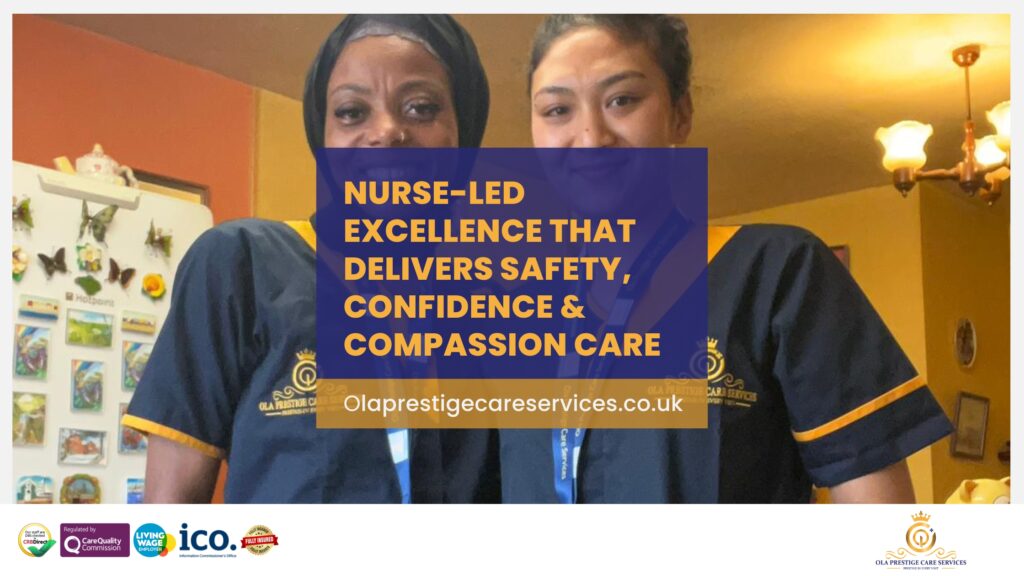
Home Care Provider in Dartford Nurse-Led Excellence That Delivers Safety, Confidence & Compassion-Ola Prestige Care Services Dartford - Kent - United kingdom - Home Services - Hospital Reablement

At Ola Prestige Care Services Ltd, we are proud to be a trusted home care provider in Dartford, delivering clinically informed, compassionate, and person-centred care. Excellent home care is not assumed; it is built. Families rely on us during some of the most important moments of life, and they deserve more than basic support. They deserve reassurance, professionalism, and care that is led by expertise. That is why Ola Prestige Care is a nurse-led, CQC-registered home care provider in Dartford, ensuring every care assistant who enters a client’s home is trained, assessed, and supported to the highest standards. Because great care starts long before the visit begins. The Power of Nurse-Led Home Care in Dartford Many families searching for a home care provider in Dartford are unaware of how much difference clinical leadership makes behind the scenes. At Ola Prestige Care, registered nurses oversee training, competency assessments, care planning, and ongoing supervision of every healthcare assistant. This ensures care is safe, consistent, and aligned with best practice. Our nurse-led model sets us apart from standard domiciliary care agencies and gives families genuine peace of mind. 1. Nurse-Led Competency Assessments Before supporting clients, every healthcare assistant completes structured clinical and practical assessments led by a registered nurse. This ensures our team can safely support individuals with: As a professional home care provider in Dartford, we do not compromise on safety. 2. Bespoke Care Plans Designed by Nurses Every person we support is unique. Their health needs, cultural background, routines, and personal preferences matter. Our nurses create detailed, outcome-focused care plans that reflect: This nurse-led planning is why families experience consistency, dignity, and respect at every visit. 3. Ongoing Supervision & Professional Support Quality home care is not a one-time event, it requires continuous oversight. Our nurse-led home care service in Dartford includes: This structure keeps care safe, responsive, and professionally accountable. Why This Matters When Choosing a Home Care Provider in Dartford Selecting a home care provider is a deeply personal decision. Families want reassurance that their loved one is safe, respected, and genuinely cared for. Most families look for: Our nurse-led approach ensures care is grounded in expertise not guesswork. With Ola Prestige, peace of mind is not optional; it is built into our service. Why This Matters for Our Care Team We believe confident carers deliver better outcomes. As a leading home care provider in Dartford, we invest in our staff through: This is how we build a team that truly represents Prestige in Every Visit. Our Promise as Your Home Care Provider in Dartford When you choose Ola Prestige Care Services Ltd, you are choosing: Your loved one deserves nothing less. Let’s Raise the Standard of Home Care Together If you are looking for a trusted home care provider in Dartford that combines safety, compassion, and clinical leadership, we are here to support you. 📞 07399 315159 📍 Dartford | Gravesham | Bexley | Surrounding Areas Ola Prestige Care Services Ltd — Prestige in Every Visit.

Copyright © 2026 | Prestige Care Connect | All Rights Reserved | Powered by WebCraft City